The Mediterranean is a mood, not a complete itinerary
Greece and Italy both promise light, food, history and landscapes that encourage outdoor living. That similarity can hide the decisions that shape a retreat: island or mainland, coastal heat or hill-town evenings, dedicated centre or family-run estate, simple practice week or activity-rich cultural programme.
Choose the setting before the country. A quiet Greek island may have more in common with rural Sicily than with a large resort near Athens. A Tuscan estate can feel entirely different from a retreat on the Adriatic. Exact location and transport are better guides than national imagery.
Greek islands create containment
Island retreats often produce a natural sense of separation from daily life. The ferry or short flight marks a clear transition, and the sea becomes part of the day even when swimming is not scheduled. Smaller islands can support a gentle rhythm of practice, walking and shared meals.
That containment has practical costs. Ferry schedules, wind and seasonal services can affect arrival. Some islands become intensely busy in midsummer and very quiet outside it. Check how far the retreat is from the port and whether transfers align with realistic connections.
Italy often weaves yoga into food and countryside
Italian retreats frequently use farmhouses, villas and small estates as their base. Programmes may combine yoga with walking, cooking, wine, olive oil, horse riding or visits to nearby towns. This can make the trip feel culturally rich without requiring a separate touring holiday.
It also means yoga may be one element rather than the sole focus. Read the timetable if practice depth matters. A beautifully described seven-night stay might contain fewer classes than a compact island retreat. That can be ideal for a holiday-with-yoga and disappointing for an immersion.
Food is central in both places
Mediterranean ingredients suit retreat dining: vegetables, legumes, grains, herbs, fruit and olive oil. Yet ‘Mediterranean diet’ does not explain whether a programme is vegetarian, vegan, alcohol-free or accommodating of allergies. Ask for a sample menu and meal schedule.
In Italy, wine tasting or regional food may be a deliberate part of the experience. In Greece, family-style meals and local tavernas may shape social time. Decide whether you want dietary discipline, cultural pleasure or a balance. A retreat should state its approach without moralising about food.
Season is part of the design
Late spring and early autumn often provide warm days and more comfortable practice temperatures. High summer can be hot, crowded and expensive, especially on famous islands and in heritage cities. Rural nights may still become cool, and sea breezes can change outdoor classes quickly.
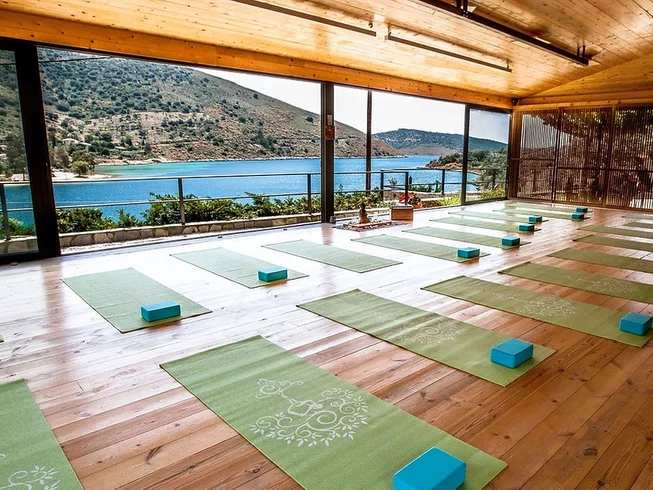
Ask about shade, indoor alternatives, fans or air conditioning. Shoulder-season retreats should explain plans for rain. A beautiful outdoor platform is not enough if the programme has nowhere comfortable to move when weather changes.
Choose the trip around the practice
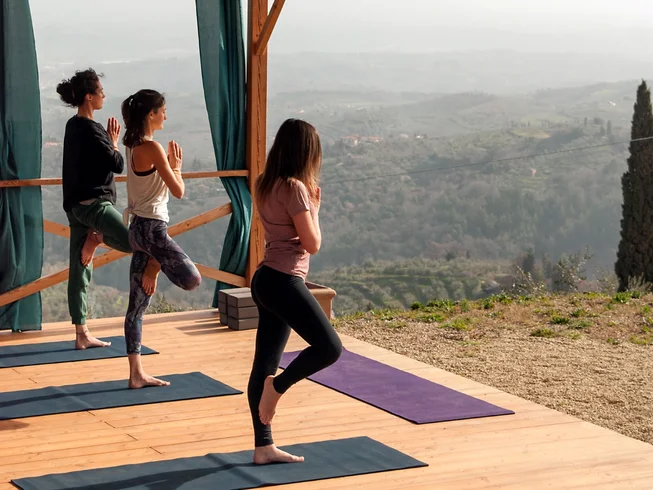
Greece may be the stronger fit when the sea, island simplicity and a contained week are central. Italy may suit travellers who want countryside, food culture and activities threaded through the retreat. Both countries offer exceptions to those patterns.
The final choice should still return to teacher, timetable, room and terms. The Mediterranean can set the scene, but the quality of the retreat is created in the daily details.
Plan the edges of the retreat carefully
Mediterranean transport is part of the choice. Check the final ferry, train or rural transfer before buying the international flight. A late arrival may require an expensive private transfer or an extra hotel night. Build a buffer when an island ferry or multiple rail connections stand between you and the opening session.
Afterwards, resist the urge to see an entire country in three days. One nearby town, island or countryside stay often extends the retreat mood better than a rapid checklist of landmarks. The strongest itinerary allows the retreat to be the centre of the trip rather than a quiet pause between rushed transfers.
YogaHotel offers travel and editorial guidance, not medical advice. Retreat practices vary, and individual health needs should be discussed with an appropriately qualified professional and the retreat organiser.