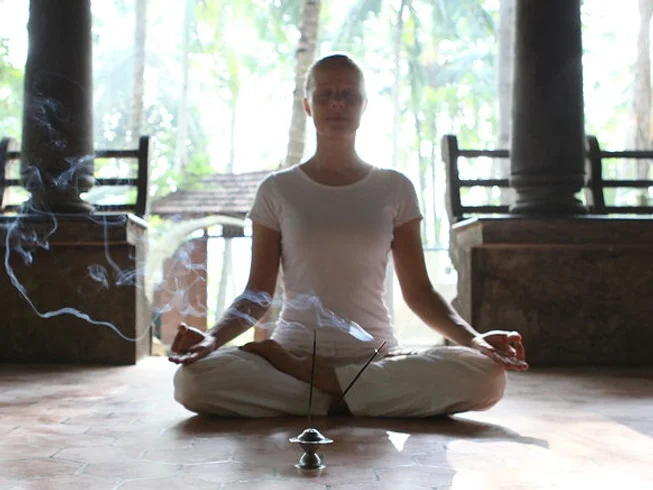
India is not a single yoga destination
A retreat in Rishikesh, Kerala, Goa or the Himalayan foothills can share the word ‘yoga’ while offering a completely different climate, tradition and daily life. India’s scale makes regional choice fundamental. Begin with the kind of environment and teaching you want, then investigate the season and travel route.
Rishikesh is associated with ashrams, teacher training and the Ganges; Kerala often pairs yoga with Ayurveda; Goa offers coastal retreats and an international community. These descriptions are starting points rather than guarantees. The individual school and teacher remain more important than the place name.
Understand the spectrum from ashram to resort
An ashram may involve simple accommodation, vegetarian meals, early mornings, community duties, devotional practices and firm rules. A wellness resort may offer private rooms, spa treatments, leisure facilities and a flexible schedule. Many retreats sit between these models.
Read rules on clothing, silence, attendance, alcohol, food and relationships before booking. Simplicity can be meaningful when chosen willingly; it becomes uncomfortable when mistaken for a budget hotel. Likewise, luxury does not make a programme inauthentic, but it changes what you are buying.
Look beyond the word ‘traditional’
‘Traditional yoga’ can refer to lineage, philosophy, teaching method or simply atmosphere. Ask what is actually taught: asana, pranayama, meditation, chanting, scripture, ethics or anatomy. Teacher biographies should explain training and experience rather than relying on spiritual titles alone.
A credible programme welcomes practical questions. It should describe the daily schedule, class level and language of instruction. Be cautious when a retreat promises cures, guaranteed awakening or rapid mastery. Depth is more likely to appear in consistent practice and careful teaching than in extravagant claims.
Travel with cultural humility
Yoga retreat travel involves entering a living culture, not visiting a backdrop for personal transformation. Learn basic local etiquette, dress appropriately for temples and villages, and ask before photographing people or ceremonies. Follow the guidance of local hosts even when other visitors behave casually.
Notice who interprets the culture in the programme. Are local teachers, guides and practitioners presented as knowledgeable participants, or are traditions filtered entirely through visiting facilitators? Respectful retreats name their collaborators and avoid turning sacred practices into decorative entertainment.
Take health and logistics seriously
Travel distances can be long, traffic unpredictable and climates demanding. Plan a buffer before the retreat and avoid arriving directly from an overnight journey if the first day is intensive. Check official travel and health advice for your passport, route and circumstances.
Ask about drinking water, food hygiene, mosquito protection, medical access and the organiser’s emergency process. Carry prescribed medication and appropriate insurance. Yoga, Ayurveda and wellness treatments should complement—not replace—medical care when medical care is needed.
Approach Ayurveda as an individual system
Some retreats include consultations, massage, herbal preparations or cleansing practices under the Ayurveda label. Ask who conducts the consultation, what qualifications they hold and whether treatments are optional. Disclose medication, allergies, pregnancy and relevant health conditions.
Avoid programmes that prescribe extreme restriction to every guest or pressure you to stop conventional treatment. A retreat can offer rest, routine and attentive care without making unsupported health promises. Clear boundaries are a sign of seriousness.
Let study change the shape of the trip
India can invite a wider view of yoga than posture practice alone. Philosophy, language, ritual, service and community may become part of the week. You do not need to adopt every belief to listen respectfully and ask thoughtful questions.
Choose enough time to arrive, participate and reflect without collecting experiences at speed. The most respectful approach is also often the most rewarding: travel slowly, pay attention to context and allow teachers and places to be more complex than the story you brought with you.
Questions to send the school before booking
Ask who teaches each subject, how many guests attend, which sessions are compulsory and what experience is assumed. Request clear photographs of the selected room and practice space. Confirm water, meals, airport or station transfer, arrival time, dress guidance and access to medical care. For Ayurveda, ask who consults and exactly which treatments or preparations are included.
The response should help you understand daily life, not merely repeat that the experience is authentic. Specificity is a form of hospitality. A school that explains its expectations gives you the chance to enter respectfully, while a traveller who asks careful questions is less likely to arrive with demands shaped by fantasy.
YogaHotel offers travel and editorial guidance, not medical advice. Retreat practices vary, and individual health needs should be discussed with an appropriately qualified professional and the retreat organiser.