Choose for the energy you have, not the person you admire
Retreat browsing can become aspirational. A mountain itinerary suggests courage; a silent week suggests depth; a surf camp suggests effortless vitality. None of those images tells you what your body and attention need now.
Before comparing programmes, look at the previous month. Have you been sedentary and hungry for movement, or overstretched and short of sleep? Do open days feel liberating or uncomfortable? The honest answer is a better guide than the identity attached to either style of retreat.
What a restorative retreat actually asks of you
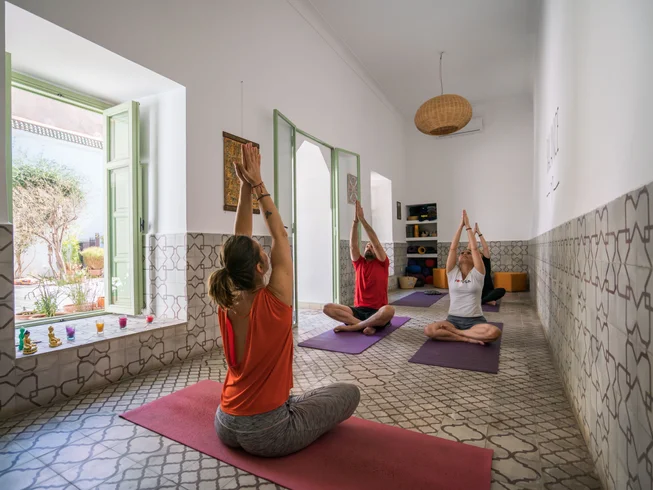
A restorative programme may include slower yoga, Yoga Nidra, meditation, massage, quiet meals and generous unscheduled time. It is not necessarily passive. Stillness can expose restlessness, and long periods without distraction may feel unfamiliar.
Check whether ‘restorative’ describes the teaching or only the setting. A luxury room and spa do not make two daily power classes restorative. Look for a timetable that protects sleep, includes optionality and does not turn relaxation into a series of appointments.
What an active retreat can offer
Hiking, surfing, paddling, riding or cultural excursions can create focus and confidence. Activity also makes social connection easier because conversation grows around a shared task. For people who struggle to rest on command, movement can be the route into a quieter mind.
The risk is accumulation. Yoga, a long hike and an afternoon workshop may each be reasonable, but together they can remove recovery. Ask which activities are optional and whether alternative levels are offered. An active retreat should build energy across the week rather than spend it all at once.
Use sleep as a decision filter
If you are chronically tired, a schedule beginning before dawn may not be the reset it appears to be. Read wake-up times, evening activities and room arrangements. Shared accommodation, unfamiliar sounds and climate can reduce sleep even in a peaceful place.
An active retreat can still support rest when the days are well paced and the room is comfortable. A restorative retreat can undermine it when every sunrise practice is treated as compulsory. The label matters less than the sleep opportunity built into the real timetable.
Consider your relationship with free time
Some travellers need open afternoons to read, wander or do nothing. Others become anxious without structure and enjoy knowing what comes next. Neither preference is more evolved. Choose the amount of free time that feels spacious but not destabilising.
If a quiet retreat appeals but several empty hours feel daunting, look for a gentle middle ground: optional walks, a pool, nearby cafés or treatments that can be booked locally. If an active week appeals but you need autonomy, choose a programme where excursions are genuinely optional.
Do not ask a retreat to treat burnout
The word burnout is used casually, but severe exhaustion and mental-health symptoms may need professional assessment and changes that extend beyond a holiday. A retreat can provide rest and perspective; it cannot repair an unsafe workload or replace clinical support.
Be cautious of programmes that promise to cure burnout in a few days. Favour clear schedules, consent-based teaching and modest claims. If you are uncertain whether travel or intensive practice is appropriate, speak with a qualified professional who understands your situation.
The best choice may be a balanced week
Many strong retreats combine one substantial activity with a calm daily practice and protected free time. This avoids the false choice between lying still and pushing hard. A morning class, a few carefully chosen outings and unplanned afternoons can feel both restorative and alive.
Choose the programme whose ordinary Tuesday looks appealing—not only the excursion day or spa photograph. The daily rhythm is the retreat you will actually experience.
Try the Tuesday test
Ignore the arrival ceremony and signature excursion. Read the most ordinary full day on the itinerary. Imagine waking at that time, joining those sessions and eating at those hours after several days away from home. Notice whether the schedule creates interest, relief or quiet resistance. That imagined Tuesday is a better decision tool than the retreat’s most dramatic photograph.
If you remain unsure, choose the programme with more optionality and clearer alternatives. Energy can change between booking and travel. A retreat that permits rest, offers different activity levels and avoids shaming guests for changing plans is more likely to meet the person who actually arrives.
YogaHotel offers travel and editorial guidance, not medical advice. Retreat practices vary, and individual health needs should be discussed with an appropriately qualified professional and the retreat organiser.