Look for evidence behind the adjectives
Eco, conscious, authentic and community-based are flexible words. They can describe careful work or decorate ordinary tourism. A credible retreat explains specific practices: how water is managed, who owns the property, where food comes from, how staff are employed and what happens to waste.
Do not expect perfection from a small operator. Look for awareness, measurable choices and honest trade-offs. A remote centre may need bottled water for safety, for example, while still reducing other single-use plastic. Precision is more trustworthy than purity.
Follow the money and the decision-making
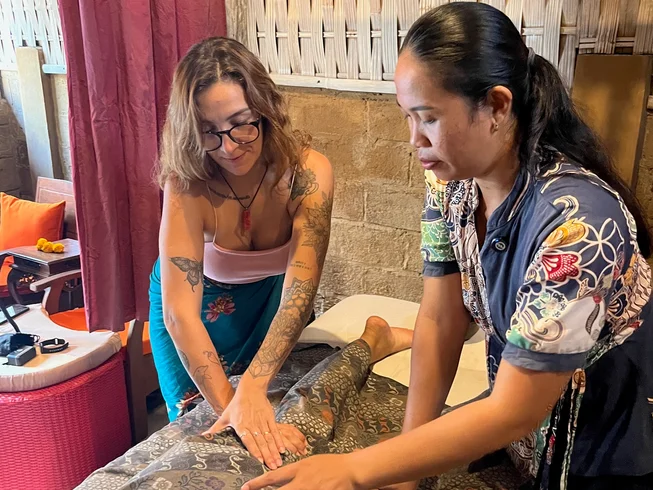
Local employment is valuable, but ethics goes beyond hiring staff for service roles. Notice whether local teachers, managers, guides and suppliers hold visible responsibility. Retreat descriptions should name partners rather than presenting the visiting host as the sole source of knowledge.
Ask whether community visits are invited and compensated, particularly when they involve homes, schools, ceremonies or vulnerable groups. Guests should not be turned into spectators of someone else’s life. Ethical encounters have clear consent and benefit that is not limited to promotional photographs.
Treat cultural practices as more than retreat décor
Yoga already travels across culture, language and power. Retreats that add local rituals, sacred sites or Indigenous practices carry another layer of responsibility. Who leads the activity? How is its meaning explained? Can community members set boundaries around access and photography?
A respectful programme avoids claiming ownership of a tradition after brief training. It credits teachers and does not combine practices into an exotic wellness collage simply because they sell well together. Guests can participate with humility without pretending expertise.
Examine land, water and wildlife claims
In water-stressed destinations, pools, laundry and landscaped grounds have real impact. Ask about refill stations, linen changes, wastewater and drought measures. Solar panels are positive, but they do not answer every environmental question.
Wildlife activities require particular care. Avoid programmes offering captive-animal handling, staged encounters or feeding that changes natural behaviour. Responsible nature experiences use appropriate distance, qualified guides and rules that protect habitat even when that limits the photograph.
Consider carbon without turning the trip into a purity test
Long-haul flights are often the largest part of a retreat’s footprint. Travelling less often, staying longer and combining the retreat with a wider trip can make more sense than several short flights. A closer destination may offer everything you need with less travel fatigue as well.
Carbon offset claims deserve scrutiny and do not erase emissions. Focus first on avoiding unnecessary journeys, choosing direct routes where practical and using lower-carbon ground transport. Sustainability is a set of better decisions, not a certificate of innocence.
Ethics includes how guests are treated
Consent, accessibility and honest marketing belong in responsible travel. Teachers should not touch students without permission, make medical claims outside their competence or pressure guests into emotional disclosure. Clear safeguarding and complaint routes matter, especially on isolated properties.
Pricing and cancellation terms should be understandable. Dietary needs, mobility limits and room conditions should be discussed without shame. A retreat cannot claim to care for the planet while treating people as interchangeable content or income.
Ask five questions before booking
Ask who owns and runs the retreat; how local teachers and suppliers are involved; what the centre does about water, waste and energy; how cultural and wildlife activities are governed; and what safeguarding and consent policies apply. The quality of the answers matters more than whether every answer is ideal.
Responsible travel is relational. It asks whether the place, hosts, community and guests are better served by the way the retreat operates. Choose programmes willing to discuss that relationship in concrete terms—and remain willing to adjust your own expectations too.
How to read the organiser’s answer
Ethical questions do not require a perfect sustainability report. A small organiser may answer in an email, name its local partners and acknowledge what it is still trying to improve. Look for concrete examples, shared credit and a willingness to discuss limits. Evasive slogans are more concerning than an honest account of imperfect progress.
Your behaviour matters after booking. Follow water guidance, avoid photographing people without consent, pay fairly, learn local etiquette and do not demand imported comforts in a resource-limited setting. Responsible retreat travel is not a product purchased once; it is a relationship practised throughout the trip.
YogaHotel offers travel and editorial guidance, not medical advice. Retreat practices vary, and individual health needs should be discussed with an appropriately qualified professional and the retreat organiser.