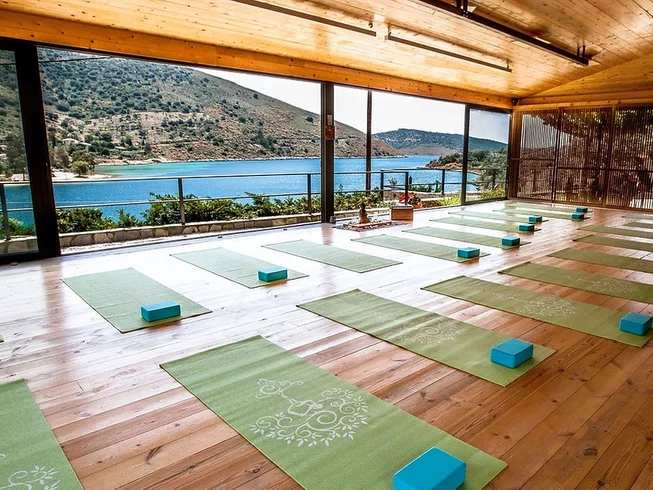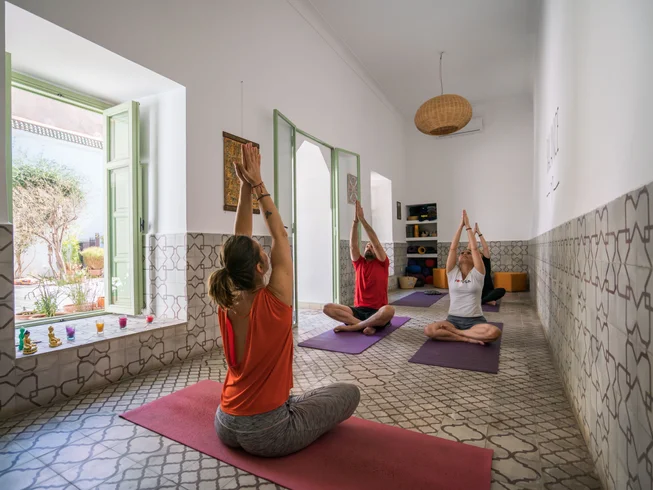
Arrival can feel less serene than the photographs
The first day often contains more logistics than revelation. People arrive at different times, rooms are assigned, names are forgotten and the body is still carrying the journey. If you are travelling alone, the first shared meal may feel exposed. This is normal. Retreat atmosphere is built gradually; it rarely appears the moment a suitcase is put down.
Give yourself a simple arrival routine: drink water, unpack enough to feel settled, walk around the property and learn where the practice space is. Avoid judging the whole week before the opening circle. Even experienced retreat guests can need a night to adjust to a new bed, climate and group.
The daily rhythm does much of the work
Retreat days remove many small decisions. A bell, timetable or shared understanding tells you when to practise and eat. That structure can make regular yoga feel easier than it does at home. It can also reveal how much you rely on constant choice and distraction.
Early mornings are common, although not universal. The first practice may feel stiff or sleepy; by the third day the rhythm often becomes familiar. Meals and classes create natural meeting points, while free periods let the group disperse. The result is a gentle alternation between togetherness and solitude.
You do not have to perform retreat life
There may be confident practitioners, seasoned travellers and people who appear completely at ease. Their presence does not turn the week into an audition. A good teacher will offer options and set a non-competitive tone. You are allowed to rest, use props and decline a pose that does not feel right.
The same principle applies outside class. You do not have to share personal history in a circle, join every excursion or become close friends with everyone. Participate with generosity, but keep your boundaries. Meaningful experiences do not need to be dramatic or public.
Group chemistry is unpredictable
A retreat gathers people with different ages, cultures, routines and reasons for being there. Some groups connect quickly; others remain cordial and independent. Neither outcome means the retreat has failed. Meals often provide the easiest conversation because there is no pressure to produce insight.
Shared rooms require extra consideration around alarms, lights, temperature and personal belongings. Agree on practicalities early. If conflict or discomfort arises, speak to the host while there is time to improve the situation rather than saving the complaint for a review after leaving.
Feelings may become louder when life becomes quieter
Stepping away from work, family roles and digital noise can create relief. It can also bring restlessness, sadness or irritation into sharper focus. Yoga retreats are not therapy, and teachers should not present themselves as substitutes for qualified mental-health care unless they hold appropriate credentials and are working within that role.
If you are going through an acute crisis or managing a condition that could be affected by intensive practice, fasting, silence or breathwork, discuss the programme with an appropriate professional and the organiser. Choose formats that respect consent and allow you to opt out without pressure.
The middle of the week can be surprisingly ordinary
Once novelty fades, the retreat may simply feel like a sequence of classes, meals and conversations. That ordinary stretch is valuable. Repetition gives you a chance to notice how the same practice changes with sleep, mood and familiarity.
Avoid chasing a breakthrough. A useful retreat outcome might be learning one modification, enjoying breakfast without a phone, discovering that morning practice suits you, or deciding that you prefer shorter classes. Small, testable insights travel home more easily than grand declarations.
Plan the return before you leave
The journey home can erase the retreat rhythm quickly. Before departure, choose one modest habit to continue: a ten-minute sequence, one device-free meal or a weekly class. Exchange contact details only with people you genuinely want to hear from, and photograph any written practices with the teacher’s permission.
Expect normal life to feel noisy for a day or two. A retreat is a temporary environment, not a test of whether you can remain calm forever. Its value is not measured by preserving the mood; it is measured by what you understand more clearly afterwards.
A useful first-retreat mindset
Arrive as a participant rather than a consumer of perfect moments. Be on time, learn the house rules, tell the teacher what they need to know and offer basic consideration to the people sharing the week. At the same time, remember that you are a paying guest with the right to clear information, adequate food, safe teaching and respectful boundaries.
Keep expectations specific and light. You might hope to practise every morning, have three proper conversations or spend one afternoon without your phone. These aims are within reach and leave room for surprise. A retreat does not need to alter your identity to be worth the journey.
YogaHotel offers travel and editorial guidance, not medical advice. Retreat practices vary, and individual health needs should be discussed with an appropriately qualified professional and the retreat organiser.